*
Observation from a former student 1/2014
Vincent, I love how you refer to your expanding presence as a negative-fact of fame. The truth is that authors and poets are loved in life, but mostly by those somewhat close to them, and those who are closer tend to loathe them. When death finally removes those attachments, then the real fame starts. Why is this? Perhaps because society, as weak as it is, will not be afraid of the backlash of its attentions. Authors, Poets and life-learners all have one thing in common, they are AWARE. People are afraid of that, and so they hide, fame along with it. The good thing is that fame is as constructed at the use of the word “cool”, and as such, a good poet keeps a wary eye out for it. It hits like a train. Sure the money is sometimes good, but you are ruined. Would a poet want to be hit by the fame-train and die because of it or would they rather like to ride it a bit? Either way, this particular train always has something to do with the killing of a poet.
Wayne A. Ceallaigh (Barone)
*
Reaction to the Video Po- Matinee Idle 7/2013
 This piece is beautifully filmed and performed but again, the music bothers me. To me, your writing has a kinda’ “B-Bop” or bluesy rhythm with a dissonant sound. The soft reflective piano forces you to interpret it like a mellowed out lounge singer. I feel the piano undermines the tone of the writing and makes it feel too “nice.” The message gets softened. Your observations on life are at once cynical, acute, and romantic, and always with a bit of sadness or an edge. Your work seems to reflect a disappointment in the reality of the world you observe, and it’s made you “world weary” and nostalgic for a different time; or perhaps a time that never really existed except in our imaginations. I’ve been there in that same place. A solo bass or a solo sax behind you, with a player who knows your head, might change the whole timbre of the sound and soul of your work.
I sure hope you don’t get offended by the criticism and find it impertinent, but I feel like you’re shining a pair of sneakers with the music. Your work is what it is, and should be out there and “in your face” when read. The other possibility is that I’m projecting my own incorrect interpretations onto your pieces and am giving misguided advice on how they should be presented.
If I picture you at the far end of a dark bar on a hot afternoon scribbling down a poem on a bar napkin, doing shots and beers, then the music is way off. On the other hand, if you’re sitting in your office, in an air conditioned cubicle, wearing a sport jacket and typing out the piece, then theic would be okay. Whether true or not, I prefer the first image because it fits the tone of your work as I read it.
Phillip Giambri – The Ancient Mariner Lower East Side
Of 21 Shaggy Dogs
By Dr. George Sebouhian, Professor Emeritus SUNY
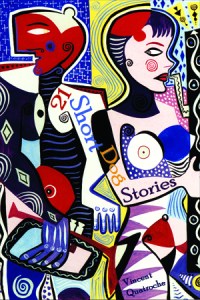 “One cannot pass twice through the same stream,”
*
‘So Heraclitus, a Greek philosopher, dubbed by some historians as “obscure.” was quoted in observing a degree of relationship to Logos’ But Heraclitus “the obscure” met his match with his disciple who did not stop with that, went further and added’ “One cannot perhaps can even do it once.”
And that’s Vincent Quatroche in the ink stream.
“I like reading him”, I told her looking across from my pillow as she was starting another book on her electronic machine. (Much like the couple in the beginning of A Good Story)
Earlier that afternoon, two hours with him tossing books and titles and even CDs at me while I was halfway absented in the midst of a memory four decades ago, in a spacious faculty reading room arguing about the latest war, and he, a stranger to me then, shouted from yards away, full decibel force but also relaxed, almost as if he were Buster Keaton, smiling at me, or himself, or maybe just everything.
I like reading you, Vince. It’s like a bullet train roller coaster in the dark, no context, can’t tell what’s ahead. Even with narrators (who are often like the reader). Some of them take control. I become a character, three dimensional, whipped through words, sharp, angled. Motion with just a whisper-hint of e-motion.
For instance, The Heckler (for my son) begins with “It was the bottom of the 12th inning of the second game of a twi-night double header [between] two mediocre ball clubs and pivots through to the ending with a Babe Ruth caricature at bat who hears a disembodied voice yell, Hey, Meat, think Hegel up there……that tragedy and or comedy is at once intellectual, ethical, and metaphysical, an inescapable feature of our particular, finite, changing self-divided lives.” You have to scrape your way through that, and maybe you’ll be ready for what follows.
The endings have no ends, as in O’Tool’s Daughter and sometimes no plot. A character appears who has kept his friends waiting in a bar and tries to make up for it with story about a potentially sexual encounter which, according to the tale teller, gave him grave reason to defer, so he rushes to where the friends are, but immediately after this explanation he gets up from his chair to go to the men’s room, leaving the two friends puzzled beyond truth, asking/telling each other, I dunno. What do you think? To tell the truth, I don’t really know what to think. Yeah I know, but really can I tell you what’s bugging me more ? And then comes the last line: What would you have done?
Quatroche could be paralleling the conceit of the delayed revelation of disclosure as his friends did, and his sort of idling (waiting) until she mouths a name that sends him running from the unwillingness to potentially incur the consequences of her past becoming their present which I see as one of those levels that teases the friends who have to wait an endless period of time for the identity of the father of a potential chance liaison with a fem-fatal Even now I’m seeing everything in the story as metaphor unexplained, without meaning on the real level, and slippery sloping on still other metaphoric levels, with the story teller as a creation of the friends (really one person going through a crisis of meaning/reality hallucinating the story to make sense of being) is the narrator now the disciple or teacher, really, going past the master.
One last example: How to Manage (For my Father), No doubt a tribute to Quatroche’s Artist father who supported his family as a movie manager for most of his life. The story which begins with someone asking Ever wonder how to manage? And the presumed manager commences to provide a lengthy list of do and don’t checklist of cliches, summarizing it with experiential authority, This then is how I manage.Which is followed with a question from the assumed group: By the way, how do you manage?
The author divides his stories into frames, from Fiction to Work to Memory. The first is wide open to speculation of meaning, the second is down to concrete specifics, the third to judgment. But I, as a lonely reader my wife has fallen asleep guided by my own emotions must tell the reader that every word is suspended by an invisible safari yet alone (shades of Emily Dickinson); he is the teller of tales, of his own brand of what used to be called Shaggy Dog Stories: ends that refuse to follow beginnings on a simple level, but also deeply ironic and privately iconic.
Why do I think so? Look to the opening section entitled Essay, from the Latin meaning try followed immediately by the section Don’t Try followed by a whole collection of Try ending with two characters in The Place Holders who don’t try because they agree to leave the story? the book? the reader ? Or perhaps just each other, preferring to preserve the unspoken understanding between them.
Now take another look at the quote, top of this page
And enjoy the rest of the book.
*
Greenport painter featured in posthumous show
By Beth Young | July 12, 2011 in Featured Stories, Lifestyle, News, The Arts
VINCENT QUATROCHE PAINTING | The late Greenport artist will be featured in his first posthumous show through August at Rothman’s Gallery.
When Greenport painter Vincent Quatroche died this year, on Easter Sunday, at age 89, his lifelong commitment to living the life of an artist still hung in the air around his home, reminding his three children and his wife that, even with him gone, they could continue to honor his memory by making art.
Two months ago, Mr. Quatroche’s son, Vince, had a chance encounter with Southold shopkeeper Ron Rothman, owner of Rothman’s Gallery and department store in Southold. The younger Mr. Quatroche, who lives in Dunkirk, N.Y., and teaches writing at Fredonia State College, was on his way to visit his mother, Edna, in Greenport. He had known Mr. Rothman since both were young men.
As I was walking through town, and I walked by Rothman’s and Ron was in front of the store, said Mr. Quatroche. He offered his condolences and said he’d like to be able to feature my father’s work at a new space next to his family store. I was flattered and floored. I couldn’t wait to tell my mom.
This past Saturday, Mr. Quatroche’s first posthumous show opened at Mr. Rothman’s gallery. It’s a vibrant collection of the artist’s signature works, which combine a sophisticated sense of color with cubist and abstract expressionist influences. And for two short hours, it was also a multimedia feast for the eyes and ears, as Vince Quatroche gave a spoken word reading to music and the band TAOST regaled the audience with song. The show will remain on display through late August.
Vince Quatroche said his father had been an artist from a very young age. The painter was the son of a jazz drummer who died just after Christmas 1938 in a car accident with his band, The Suffolk Serenadors. Jazz is a theme that runs through both the painter’s work and that of his son, who incorporated recordings of his father’s radio playing in the basement of his home into his reading Saturday night.
My father was my first collaborator, my fist teacher, he said. He gave me my appreciation for great jazz.
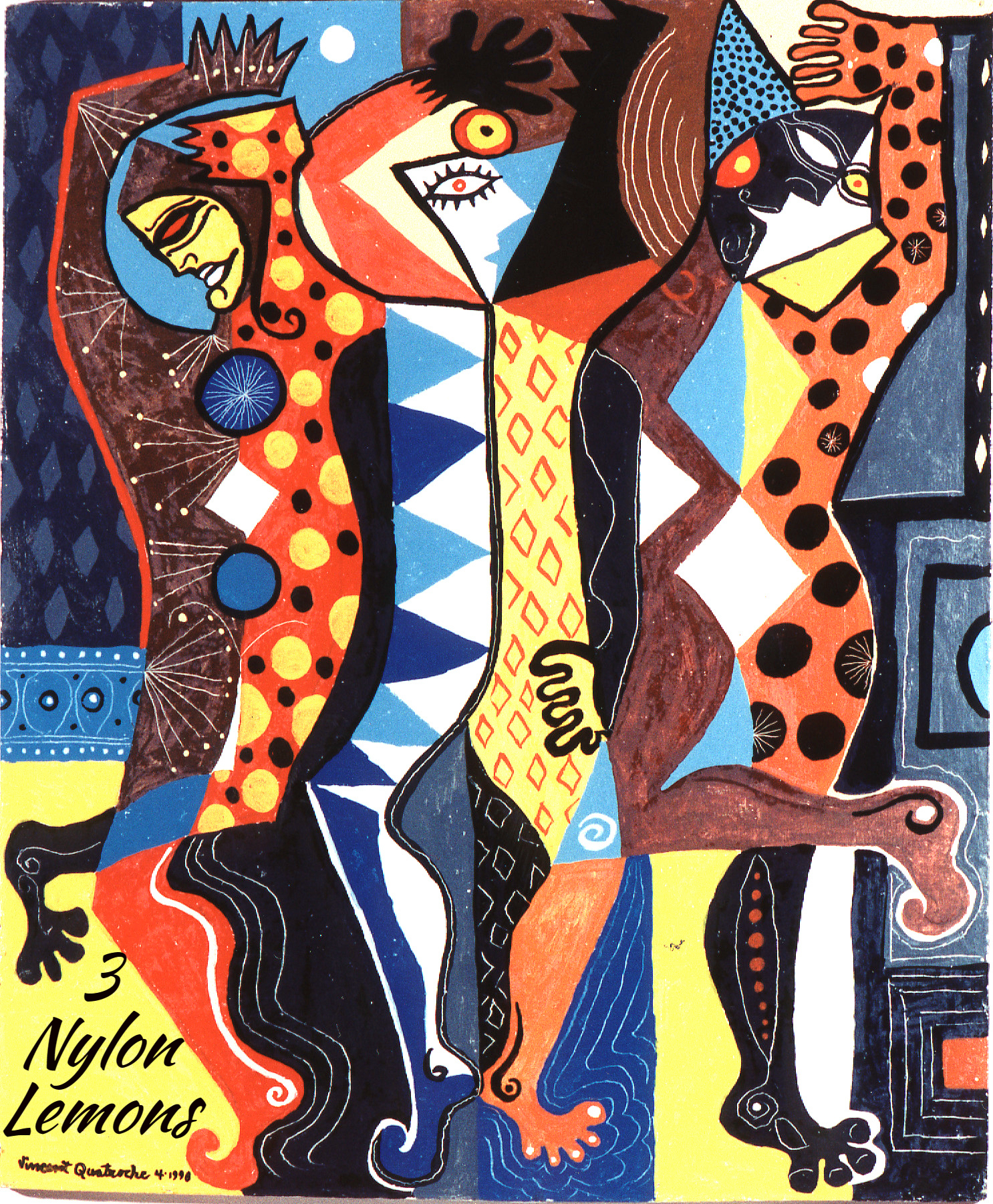
The paintings featured in the show include series of interpretations of Picasso figure studies, which show that, even when paying homage to another painter, Vincent Quatroche was keenly aware of his own style. Also on display are portraits of jazz musicians, including Thelonious Monk, Dave Brubeck and Miles Davis, and a series of works that Vince Quatroche used in his own collections of poetry and short stories.
Seen together, the paintings make clear that Vincent Quatroche is a master at exploring the landscape of an artist’s life among fellow artists. Vince Quatroche also explored that relationship masterfully Saturday night in his piece Oranges, a written response to poet Frank O’Hara’s Why I am Not a Painter. Both poems detail the spoken and unspoken worlds between words and brush strokes, where a poem could be all about oranges though the word orange is never mentioned, while a painting could reveal its true meaning through a title; where the writer could watch poets read aloud all night in a club, while the real art was not on stage but in the human interactions at the bar.
All of my appreciation of the arts came from his influence, Vince Quatroche said of his father. I’ve been around his paintings like they were family.
Vincent Quatroche was born in Sag Harbor in 1921, and attened the University of Washington School of Art and Oberlin College before serving in the U.S. Army Air Force during World War II. He was as adept at sharing his artistic life with the Greenport community as he was at sharing it with his family. In 1971, he opened Greenport’s very first art gallery, The Greenport Art Studio and Instructional Center, in the building that currently houses Eastern Long Island Hospital’s Opportunity Shop.
His work was always a presence in the town, all the time he lived here, said Vince Quatroche. So many of the images that I found so compelling had been part of my life since I was a little boy. It wasn’t until I grew up that I began to understand how good they were.
*
*
*
“Matador From Another Planet”is like a Koufax fastball and after a few plays the listener fully understands that Quatroche just may have a better change up then Koufax ever dreamed of throwing.

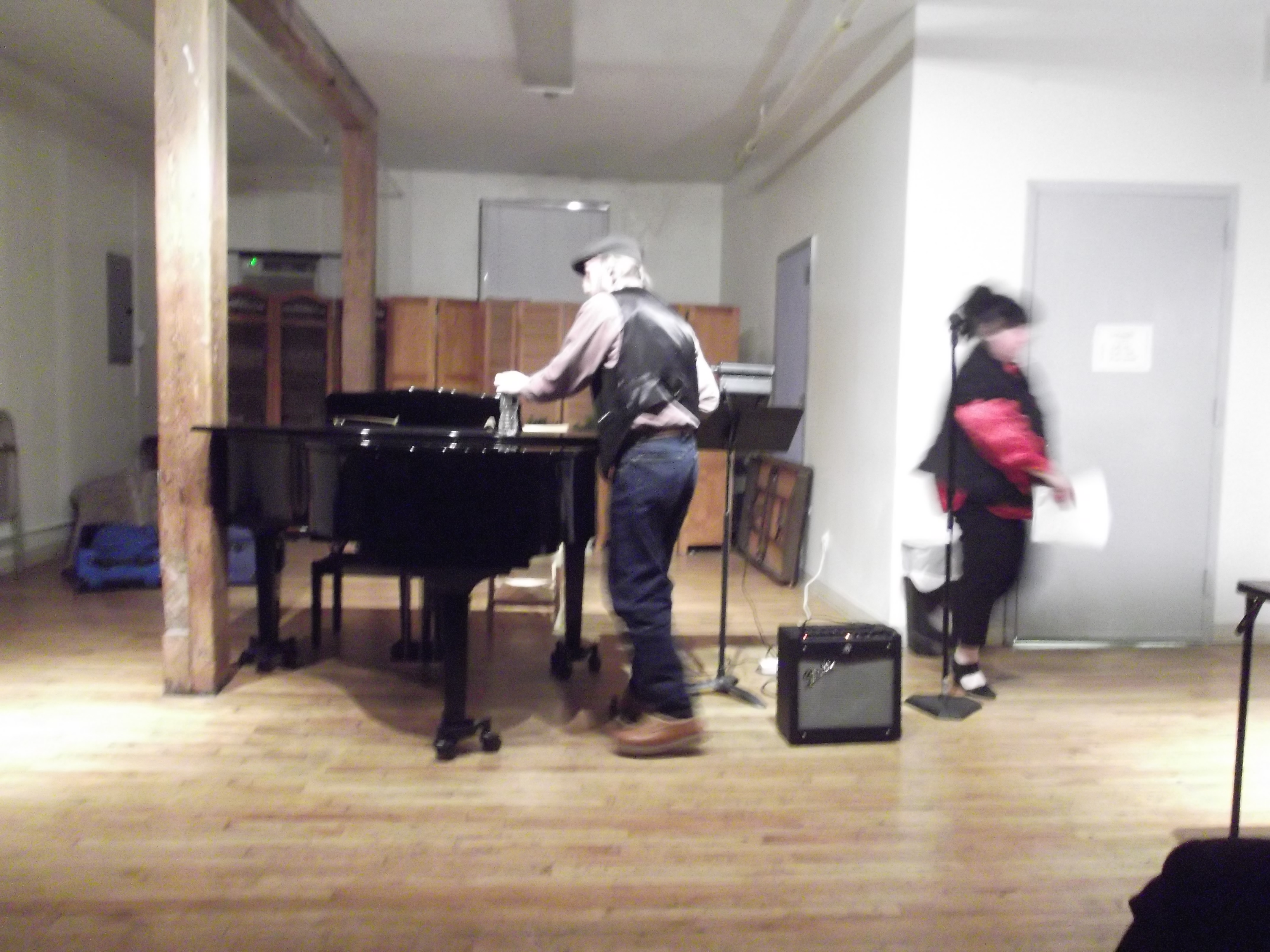
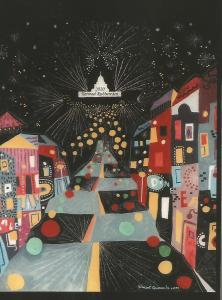
 Career educator and poet Vincent Quatroche (pictured here with his Dybbuk) admits the critics are in unanimous agreement that he doesn’t really exist and his creative efforts in various media over the last fifty years are peculiar shadows of marginal talent unique in its collective stubborn obscurity to endure perpetual literary marketplace indifference. Adirondack folk musician and Professor Emeritus SUNY Fredonia Dan Berggren who has recorded and produced Quatroche’s sound pictures since 1988 was quoted as remarking “Vince can go from blow torch to fire hose on a dime. Whether with satire or sincerity, his poems illuminate shadows then plunge you into darkness, leaving it to your imagination to find the exit.”
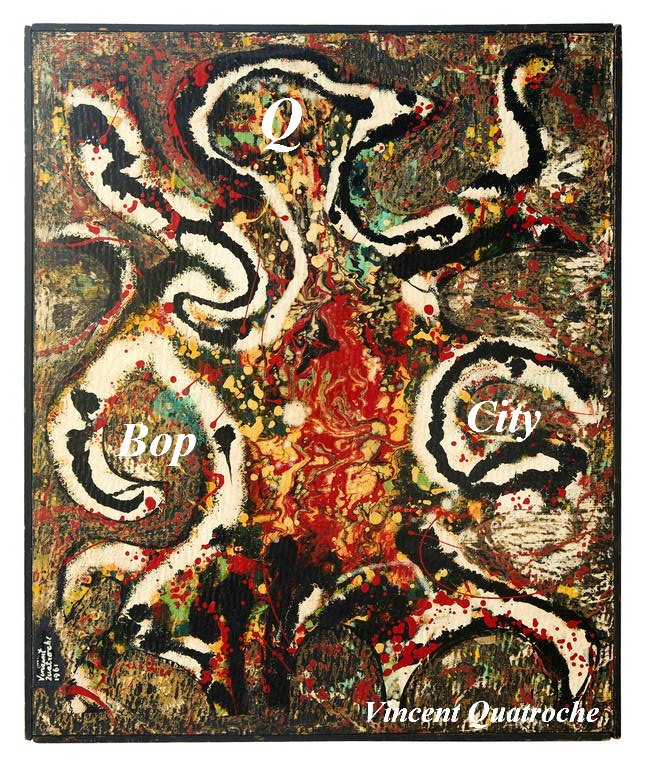
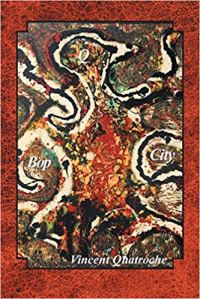 “In Q Bop City, Vincent Quatroche fills a literary kaleidoscope with brightly colored bits of jazz, art, history, sex, education, poetry, personal successes, and personal failures. Each page turned offers a twist of the kaleidoscope revealing a new arrangement of perfectly formed words telling a clean crisp story that shines bright on its own but is also a vital component of his life journey as poet/artist. His writing voice mirrors his actual voice as a delightful mix of hipster, educator, barfly, beat poet, and jazz aficionado; always with a backbeat and smooth rhythmic flow. A joyous read offering a slice of a real life lived on each page.” – Phillip Giambri, Author “Confessions of a Repeat Offender”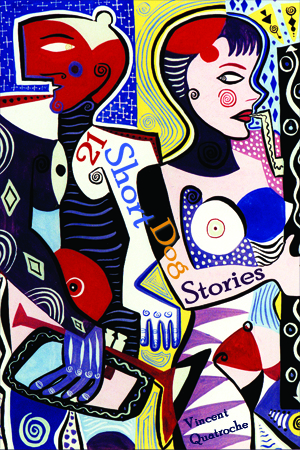




 Rubbereden
Leave a comment